Gravity
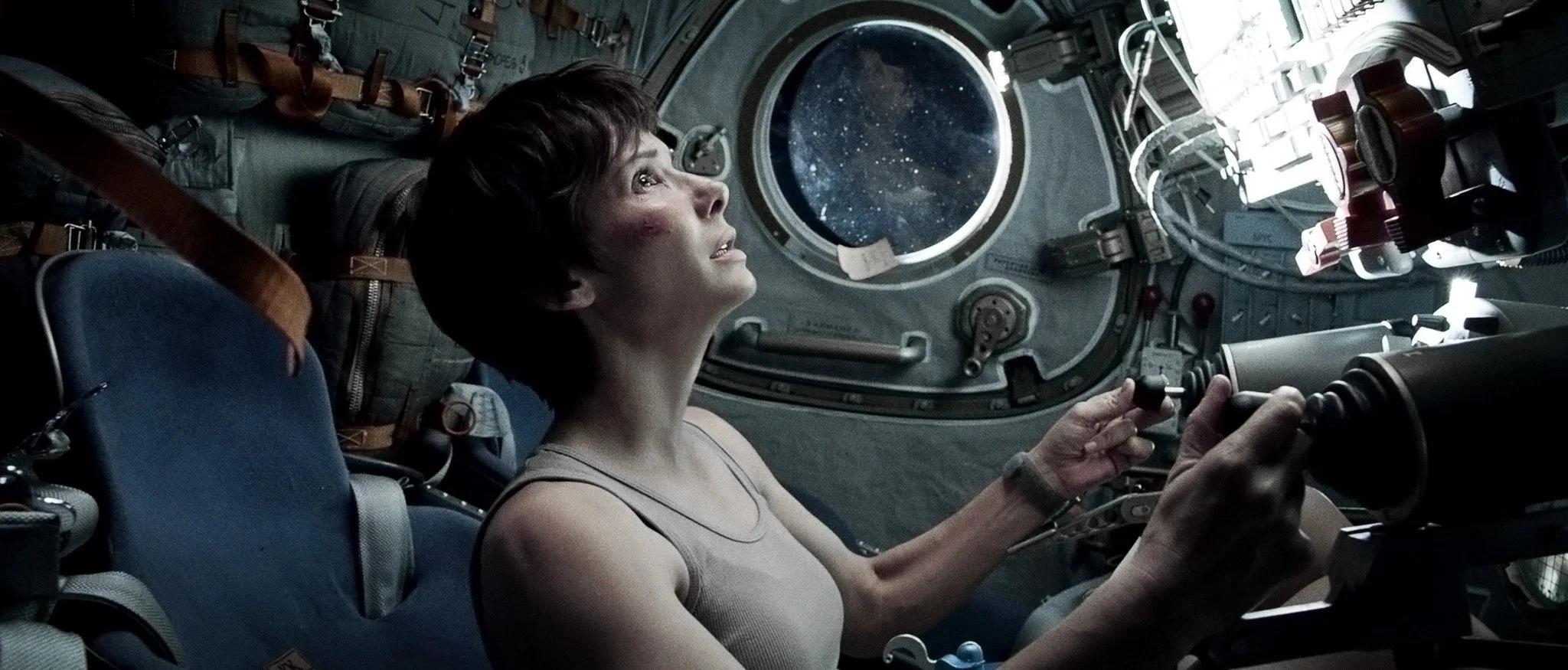
Overall Rating: ★★★★
Pop Culture Footprint: A defining technical marvel of the 2010s; Cuarón’s direction and Lubezki’s cinematography set a new standard for immersive filmmaking
Rewatchability: 3/5 — gripping and transportive, though best experienced in a theater setting
Makes You Think: About survival, isolation and the fragility of life when stripped of all control
Conversation Starter: Absolutely — a case study in tension, visual storytelling and the power of sound
Holds Up: Completely; still breathtaking, both visually and emotionally, more than a decade later
Where I’d Place It: A deserving early entry. Unforgettable even if not life-changing
★★★★
#97 – Gravity (2013)
From The New York Times: The 100 Best Movies of the 21st Century
Directed by Alfonso Cuarón
If I ever catch myself thinking I’m having a bad day, I’m going to remind myself of Gravity. Whatever’s going wrong here on Earth can’t possibly compare to the ordeal that Dr. Ryan Stone endures 372 miles above it.
When Gravity first hit theaters in 2013, I missed it entirely. My wife and I had just become new parents, and the days of catching every Oscar contender were behind us for a while. Still, I remember the buzz. Alfonso Cuarón’s name was everywhere, his latest film hailed as a cinematic event that demanded to be seen on the biggest screen possible. Watching it now, years later and on a much smaller screen, I finally understand what the fuss was about.
The premise is deceptively simple: a medical engineer on her first space mission finds herself stranded after her shuttle is destroyed by a storm of orbiting debris. Alongside her veteran crewmate Matt Kowalski, played with effortless charm by George Clooney, she must fight against impossible odds to survive and somehow find a way home. On paper, it sounds like Cast Away in space, but Cuarón transforms that concept into something far more visceral and haunting—a survival thriller wrapped in existential awe.
From the first shot, Cuarón and cinematographer Emmanuel Lubezki craft a world that feels both infinite and claustrophobic. The camera drifts, rotates and lingers with an almost hypnotic precision, creating a sensation of genuine weightlessness. The film’s sound design amplifies that immersion: in the vacuum of space, there’s no noise, so every vibration, every breath and every burst of radio static lands with amplified intensity. You don’t hear explosions, you feel them.
Sandra Bullock delivers one of the most physically demanding and emotionally grounded performances of her career. With no cutaways to Earth or mission control, she becomes our emotional compass, anchoring the film’s tension with a deeply human portrayal of fear, grief and perseverance. Cuarón smartly gives her character just enough backstory to keep the emotional stakes tangible without drifting into melodrama, and the effect is both heartbreaking and empowering.
The film also toys with striking metaphors about rebirth and resilience. Some of them land beautifully. The image of Bullock suspended in the fetal position, spinning slowly within her capsule, is unforgettable, while others feel a bit overemphasized. Still, there’s an undeniable poetry in how Cuarón balances spectacle with reflection. The story may be simple, but its emotional undercurrents keep it tethered to something universal: the will to survive when there’s no one left to save you but yourself.
If Gravity falters, it’s only in moments where its technical brilliance edges into excess. A few sequences linger longer than they need to, and the swelling score near the finale leans a bit too hard on emotional uplift. Yet even when the film wears its symbolism and sentimentality on its sleeve, its craftsmanship is too breathtaking to dismiss. Cuarón’s control of pacing and tone keeps the tension taut, and the 90-minute runtime feels exactly right—just long enough to exhaust you in the best possible way.
Even watching it over a decade later, Gravity remains a staggering technical accomplishment. It’s the kind of film that reminds you why theaters exist—to completely consume you in a world that feels impossibly vast and terrifyingly intimate all at once. I regret missing it on the big screen, because even on my home setup, I found myself gripping the edge of my seat. Cuarón’s film may not have changed my life, but it reaffirmed why I love movies: the ability to transport, to overwhelm and to make you feel something as primal as survival.
When the credits roll, and Bullock’s feet finally touch the ground, you can’t help but take a deep breath yourself. Gravity isn’t just about endurance in the face of disaster. It’s about rediscovering the sheer miracle of being alive.