Michael
★★ 1/2
Michael may be the purest example in recent memory of a movie existing because of cultural mythology more than cinematic necessity.
Going in, I had unusual apprehension. Not because I feared it would be painful to sit through, but because this film carries the full weight of the “can you separate art from artist?” debate on its sequined shoulders. Whatever one thinks of Michael Jackson as a person, and I’m not attempting to relitigate those controversies here, you simply can’t deny his singular imprint on music and pop culture. Even my kids know the songs. The pull is generational.
And honestly, the film’s box office success proves that pull is still alive.
But here’s the thing: this is not a good movie.
And… I kind of enjoyed myself.
That contradiction is what makes Michael fascinating.
As a biopic, it is drowning in clichés. If you took a drink every time someone silently nods at Michael’s genius or smiles approvingly as though witnessing divine revelation, paramedics would need to be called. The film repeatedly spoon-feeds its audience, spelling out emotions and significance rather than trusting viewers to infer anything. It often feels less interested in exploring Jackson’s psyche than in saying, “Remember this? Wasn’t this iconic?”
And yes, we remember.
That’s part of why I kept asking: Why does this movie exist? I do not need a dramatized recreation of the making of Thriller when the actual Thriller exists. I can watch his iconic debut of the moonwalk online. I do not need CGI recreations of things that were already more thrilling in reality.
The whole enterprise often feels like a glossy, estate-approved monument. Which, of course, it basically is.
Produced by Jackson’s family and estate, the film predictably avoids much of the grimmer or more troubling material. It gestures at eccentricities—Neverland, Peter Pan fantasies, Bubbles the chimp—but rarely digs deeper. Sometimes it unintentionally veers into outright comedy. A scene where Michael kisses a llama goodnight is meme fodder.
And yet…
There are performances here worth praising.
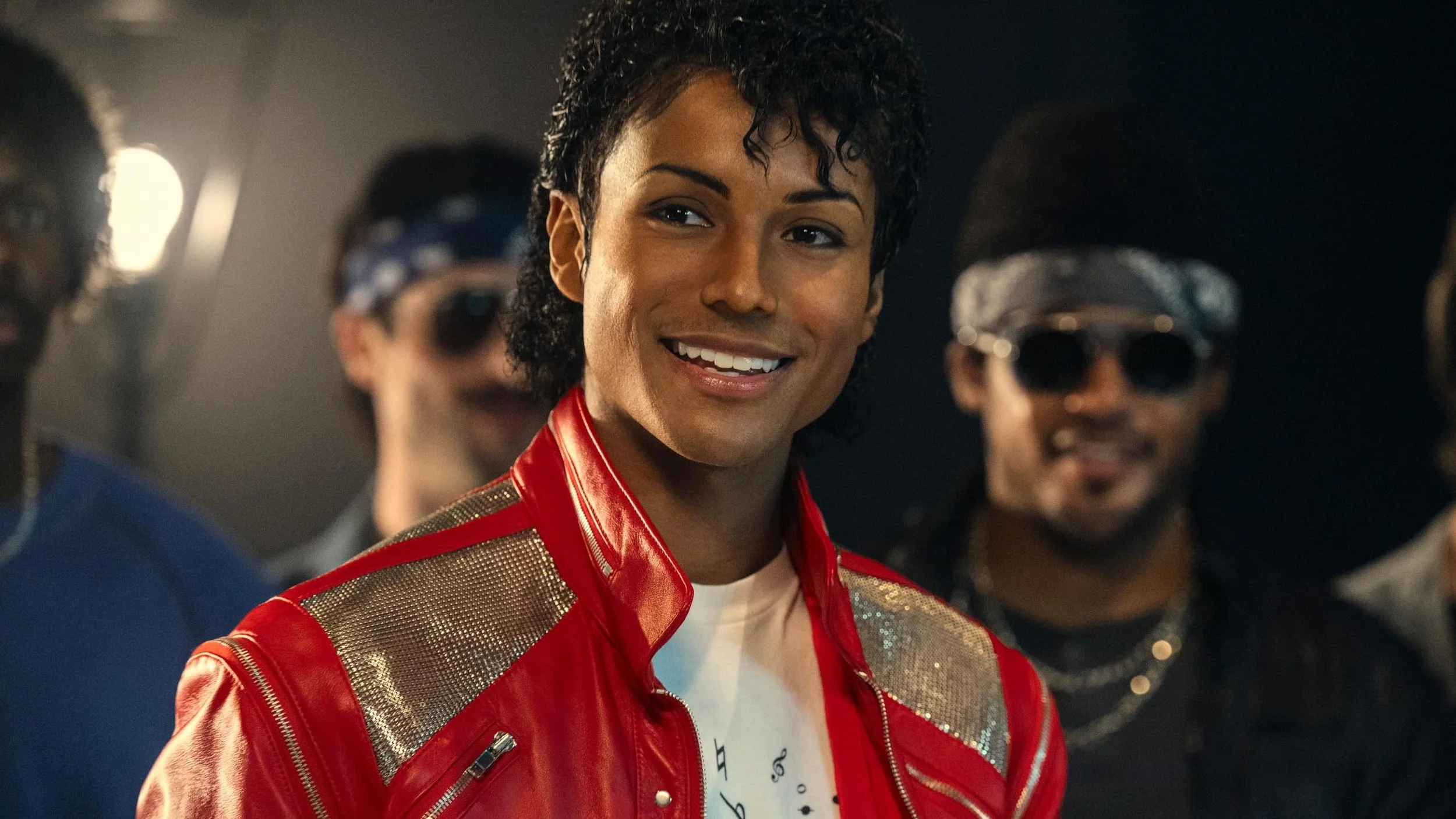
Jaafar Jackson has a near-impossible task and pulls it off remarkably well. He captures Michael’s physicality and aura without drifting into parody, which is harder than it looks.
And then there’s Colman Domingo, who once again arrives and somehow turns even broad material into something weighty. As Joseph Jackson, he brings real menace and gravitas. If the film has dramatic force, much of it comes from him.
I also have to mention the film’s streak of accidental absurdity, including the baffling arrival of Mike Myers, who now apparently has a side gig appearing in musical biopics after Bohemian Rhapsody. His scene here feels like it wandered in from a completely different movie.
And somehow… that fits.
What surprised me most is that I was rarely bored. Even when the final concert sequences ran a bit too long, the movie maintained a kind of trainwreck momentum. It is overstuffed, sanitized, often laughable and still oddly watchable.
Then it ends with the launch of the Bad era and all but teases a sequel, which raises a huge question: if this chapter already sidesteps so much, what happens when a second film reaches the far more troubled years?
I genuinely do not know how they pull that off.
But given the box office, I have a hard time believing they will not try.
So no, Michael is not a successful biopic. It is too reverential, too superficial, too content to reenact iconography instead of interrogating it.
But as a bizarre piece of pop mythmaking, accidental camp and oddly entertaining spectacle?
I cannot pretend I did not have a little fun.
A bad movie I kind of enjoyed is maybe the weirdest compliment I can give it. That’s Michael Jackson for you.
P.S. I was about to hit “Publish” on this review when it hit me that Miles Teller is in this movie, and I genuinely have no idea why. He is a big-name actor and somehow feels like less than an afterthought. It makes you wonder if he is embarrassed… or just appreciative of what was probably a pretty solid paycheck.