The Devil Wears Prada
★★★★
Confession time: yes, this was my first-ever full watch of The Devil Wears Prada. Somehow, despite its ironclad place in pop culture, this one slipped through the cracks. When it came out in 2006, I was a post-college, single guy living in the DFW area, and if I’m being honest, a fashion-forward, female-centric workplace drama just wasn’t on my radar. I’d absorbed the movie through osmosis over the years (clips, quotes, GIFs, cultural references), so I felt like I’d seen it… but I hadn’t actually sat down and watched it start to finish. Until now.
And you know what? I really enjoyed it.
One of the things entertaining movies often do is give us a behind-the-scenes peek into worlds most of us will never access. Whether those portrayals are fully accurate is always debatable, but The Devil Wears Prada absolutely nails the experience of stepping into a rarefied, high-pressure environment—here, the elite fashion industry—while grounding it in something universally relatable: working for an extremely tough boss. Maybe not “horrible,” but definitely the kind of boss that makes your stomach drop when they enter the room. If you’ve spent any real time in the workforce, you’ve met a version of Miranda Priestly.
What I especially appreciated is that while the movie has the glossy sheen of a rom-com, it isn’t really one. Yes, there’s a romantic subplot, but this isn’t a story about a woman finding love. It’s about a woman trying to figure out who she is, what she values and what she’s willing to sacrifice to succeed. That added layer gives the film more depth than its reputation sometimes suggests. The dynamics between coworkers, particularly female coworkers in a cutthroat industry, are sharp, revealing and often uncomfortably honest, but the movie never lets things get too dark. The comedy stays crisp, and the tone remains accessible.
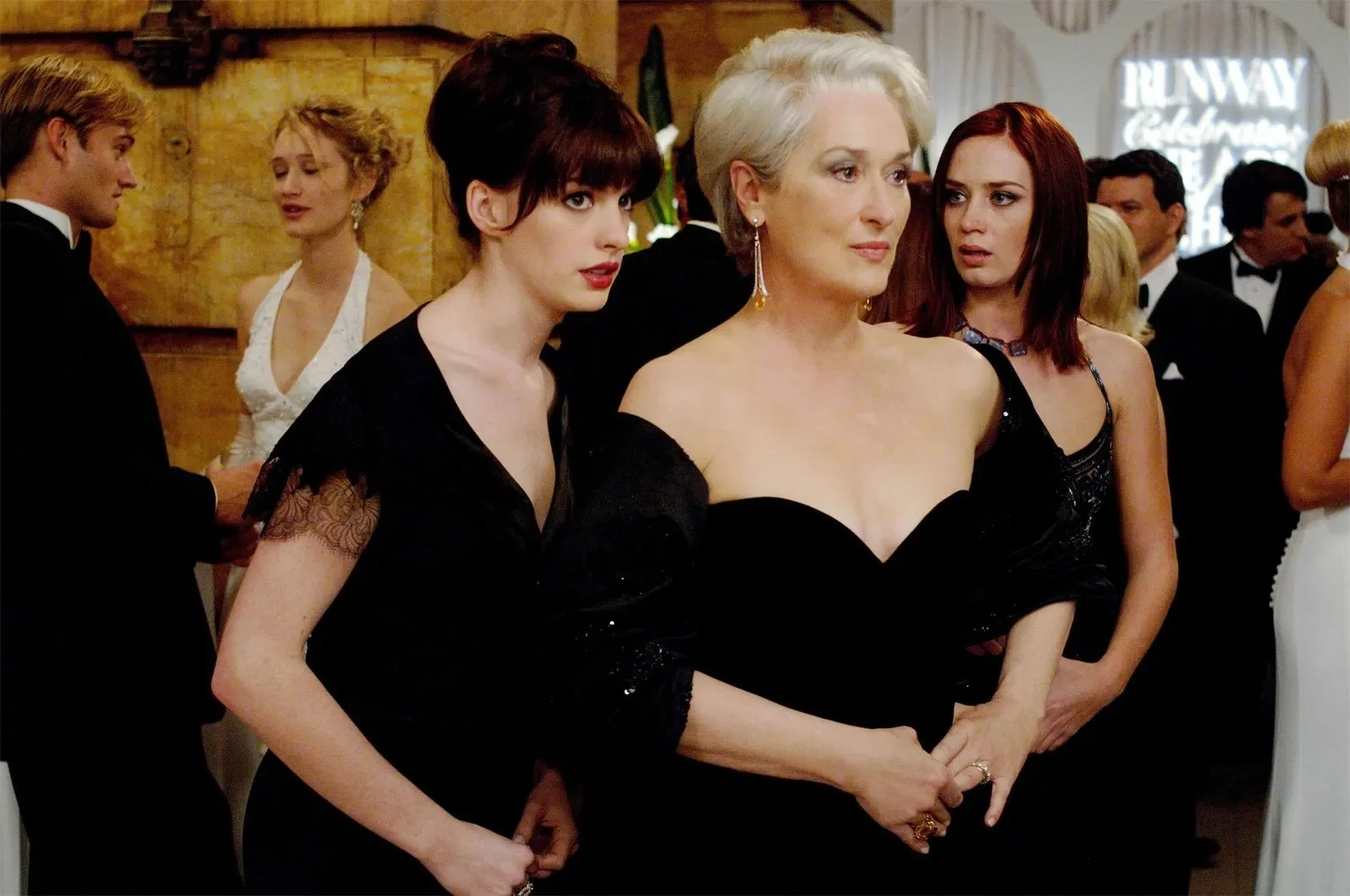
I’ve always been a fan of Anne Hathaway, and this role really highlights why. She’s an A-list movie star who still manages to feel incredibly relatable. Watching her navigate Andy’s transformation, both the confidence she gains and the compromises she makes, feels believable and earned. It’s also a blast to see Emily Blunt in one of her earliest major roles. Knowing where her career eventually goes makes her performance here even more fun, and the back-and-forth between her and Hathaway crackles with energy.
Then there’s Stanley Tucci, who kind of steals the movie. As Nigel, he’s a mentor figure who offers warmth and guidance but never completely softens his edges. He’s the perfect counterbalance to Miranda’s ferocity—a yin to her yang—and their dynamic adds real texture to the workplace ecosystem.
And, of course, Meryl Streep. Miranda Priestly could have easily been written as purely cruel, but the film smartly adds layers that make her fascinating rather than cartoonish. You don’t have to agree with her values to understand why she’s revered or to recognize the sacrifices required to maintain her position. Heavy is the crown, indeed. By the end, her arc feels just as intentional and believable as Andy’s.
Structurally, the movie is clearly built toward a satisfying conclusion, and I never doubted it would get there. What surprised me was how justified that ending felt. The character arcs, especially Miranda’s, don’t take shortcuts, and the emotional landing feels earned rather than forced.
Look, no one is ever going to accuse me of being on the cutting edge of fashion, so that world still doesn’t inherently fascinate me. I can absolutely see how people deeply invested in the industry might rank this even higher. But as a film from the early aughts, The Devil Wears Prada holds up remarkably well: smart, funny, layered and anchored by terrific performances.
It also made me genuinely excited for the upcoming sequel, which I didn’t expect to say going in. Mostly, though, I’m just glad I finally caught up with the rest of the world on this one. Better late than never.