One Battle After Another
★★★★★
The trailers for One Battle After Another suggested a conventional action thriller. It was a surprise, then, to learn the film came from writer-director Paul Thomas Anderson. Known for pushing genres in unexpected ways, Anderson has again defied expectations, creating one of the most exhilarating films of the year.
From the opening scene, the film launches at full throttle and never relents. A tense mix of action, dark comedy and social commentary, it reflects an unsettling underground war beneath the surface of American life. Anderson captures a frightening but vital world that feels ripped from the rhetoric of modern news cycles.
At its core, though, the film is about power — how people crave it, how far they will go to seize or protect it and the destruction that hunger leaves behind. Anderson threads this exploration of ambition through the bonds that hold us together: the fragile relationships between parents and children and the communities we rely on when the world grows dark.
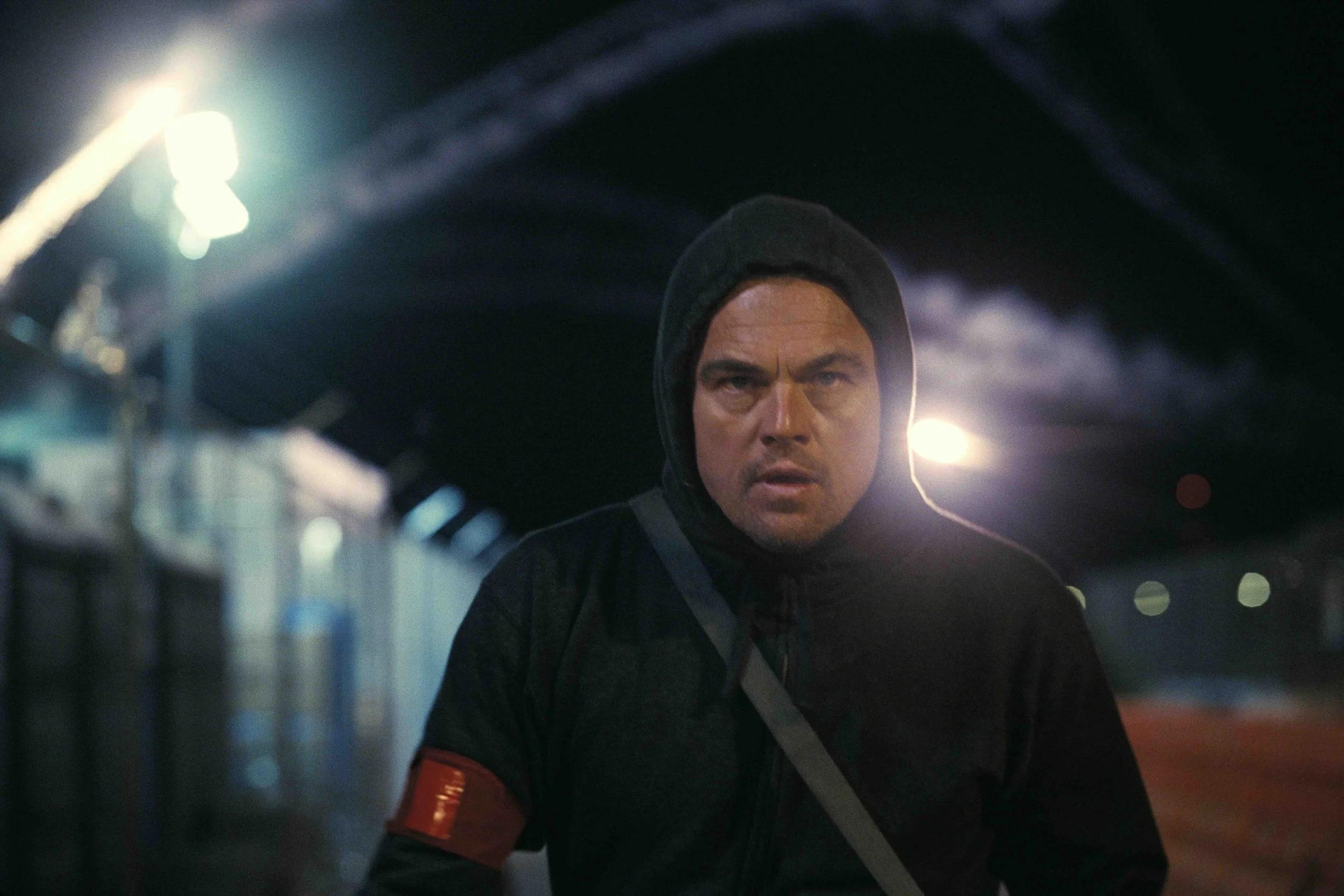
The first act alone is a masterclass in storytelling. Anderson introduces a sprawling cast with sharp editing and subtle exposition, avoiding clunky dialogue while letting the audience fill in the blanks. The sequence plays almost like a self-contained short film before giving way to the larger narrative: a cat-and-mouse chase involving Bob (Leonardo DiCaprio), his daughter Willa (Chase Infiniti) and the vengeful Sergeant Lockjaw (Sean Penn).
The performances are uniformly strong. DiCaprio balances humor and vulnerability in a washed-out revolutionary role, but he allows the ensemble to shine. The breakout is Chase Infiniti as Willa, who embodies both the ferocity of her mother and the raw fire of youth. She delivers a performance that signals a promising career ahead.
Anderson thrives with ensembles, as seen in Boogie Nights and Magnolia. He once again draws memorable work from his cast, including Benicio del Toro and Teyana Taylor as Perfidia, Willa’s mother. Taylor commands the screen with a passion and emotional presence that makes her performance unforgettable. Yet Penn dominates as Sergeant Lockjaw. His menacing, unpredictable turn leans into the character’s privilege and power in ways that feel disturbingly real. It is a performance destined for awards attention.
Visually, Anderson pushes his style forward. He uses an unusually high number of close-ups, capturing the sweat and tension etched into each character’s face, while also employing striking wide shots that allow the atmosphere to breathe. His direction of action is equally assured. A climactic car chase ranks among the most thrilling sequences of recent years.
Despite its nearly three-hour runtime, the film remains gripping from start to finish. Anderson has created a story that is relentless, darkly funny and deeply human — one that explores both the dangers of unchecked ambition and the fragile ties of family and community.
One Battle After Another is not only one of Anderson’s finest achievements. It is one of the best films of the year.