Sentimental Value
★★★★
Sentimental Value is the kind of film that quietly sneaks up on you and then stays with you long after the credits roll.
It also happened to be the final Best Picture nominee I needed to check off my list before the Oscars ceremony, which meant I was squeezing it in at the last possible moment. Honestly? I’m glad I stayed up past midnight to pull it off. It definitely lived up to the hype surrounding its International Feature buzz.
If you’re familiar with director Joachim Trier (especially his stellar The Worst Person in the World), you probably walk into this movie expecting something thoughtful and emotionally layered. What you might not expect is just how deeply this film explores complicated family dynamics and how confidently it does so without relying on the usual cinematic shortcuts.
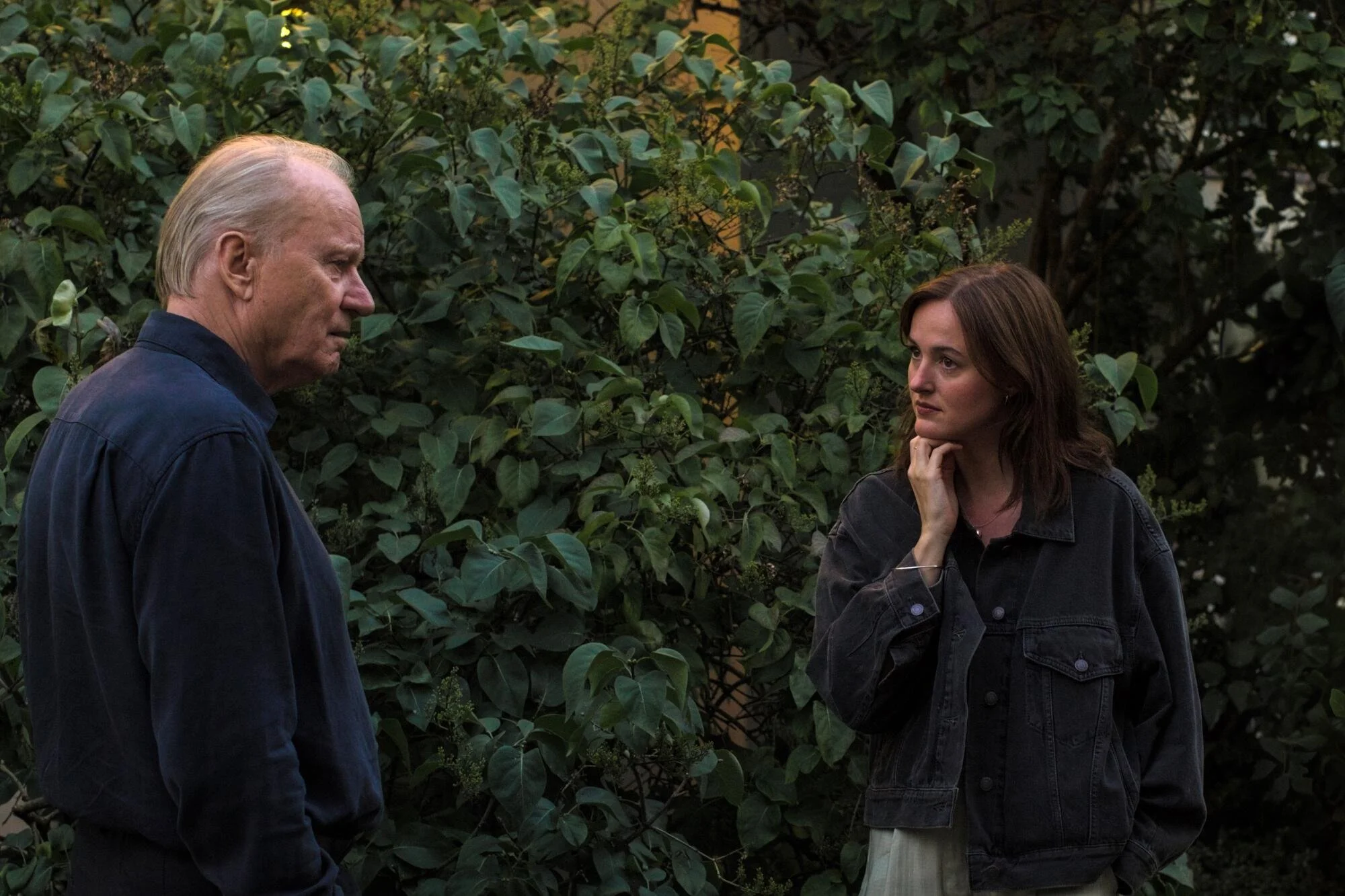
This is a stark, contemplative human drama centered on a revered filmmaker Gustav Borg (played with remarkable nuance by Stellan Skarsgård) who reenters the lives of his two daughters while attempting to mount what feels like his last great artistic statement. He wants his eldest daughter, Nora — a respected stage actress portrayed by Renate Reinsve — to star in the project. But unresolved trauma and years of emotional distance make that reunion anything but simple. What unfolds is less about plot and more about emotional geography.
Trier trusts his audience. Instead of spoon-feeding us with flashbacks or heavy exposition, he lets silence, glances and physical space tell the story. You feel the history between these characters in the way they stand across a room from each other, in the way they hesitate before speaking, in the weight of words left unsaid. It’s acting at its most precise and most human.
When the daughter refuses the role, the filmmaker turns to a famous Hollywood actress, played by Elle Fanning, who brings a surprising amount of warmth and self-awareness to the part. I’ve admittedly been on the fence about Fanning’s performances in the past, but she absolutely won me over here. Her presence adds another fascinating layer — a meta commentary on celebrity, artistic ego and the emotional cost of storytelling.
Then there’s the younger sister, Agnes — a quieter but deeply affecting performance by Inga Ibsdotter Lilleaas that almost steals the film. She serves as the emotional anchor of the family, attempting to hold things together not through grand gestures, but through empathy and subtle connection. It’s a beautifully restrained role that lingers in your mind.
Another standout element is the family home, which functions as a character itself. The creaking wooden floors, the aging architecture, the sense of memory embedded in every corner — it all contributes to the film’s exploration of genealogy, legacy and how our environments shape our emotional lives. Anyone who grew up in an older house will immediately recognize that feeling: history isn’t just remembered, it’s heard and felt.
At its core, Sentimental Value is about the ways artists communicate when they struggle to communicate as human beings. It’s about family trauma, inherited pain and the fragile hope that art can bridge emotional gaps that words cannot.
And yes, it’s primarily in a different language. But if you’re someone who usually hesitates to watch international films, this is absolutely worth the leap. The performances are so powerful, the emotional storytelling so precise, that the subtitles quickly fade into the background.
With this film and The Worst Person in the World, Joachim Trier continues to prove himself as one of the most compelling voices in contemporary cinema. Don’t be surprised if his name keeps showing up during awards season in the years to come.