Tin Cup
★★★★
There’s something beautifully fitting about the fact that my introduction to Tin Cup came courtesy of Whitney. It’s always been one of her favorites, and when we finally watched it together a couple of years ago, I liked it. This second time around? I liked it even more.
This isn’t a movie swinging for cinematic immortality. It’s not reinventing the sports genre. It’s not delivering some revolutionary romantic arc. But what it is, and what makes it work, is a tremendously good hang.
Like Roy “Tin Cup” McAvoy himself, the film is loose, charming, a little shaggy around the edges and perfectly content taking the long way to the green.
There’s a reason this pairs so naturally with Bull Durham. Both films come from director Ron Shelton, and both thrive in that sweet spot between sports movie and romantic comedy. Shelton understands the rhythms of locker-room banter and romantic tension equally well.
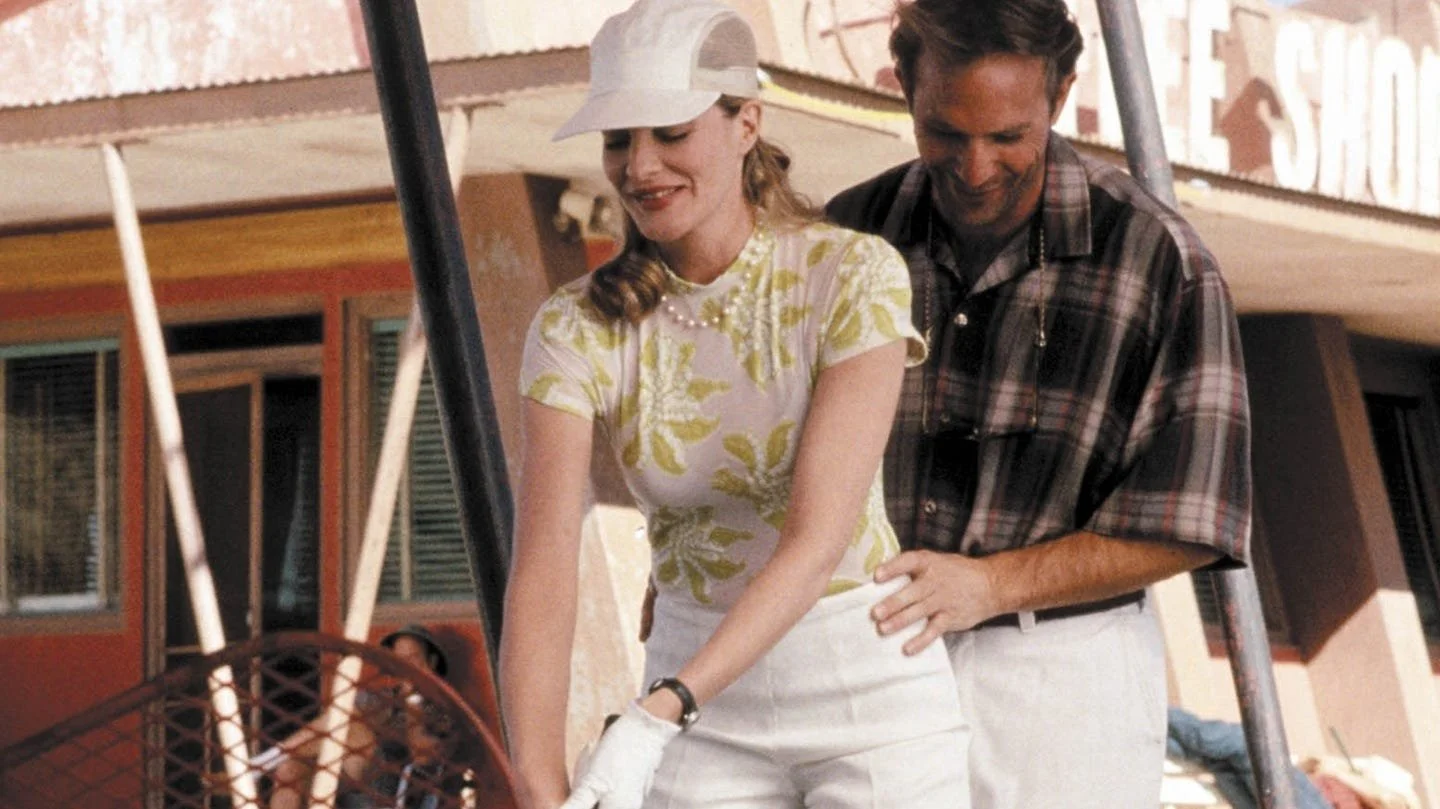
Kevin Costner plays Roy with an effortless charm. He’s the washed-up, could-have-been golf pro who’s more comfortable at his West Texas driving range than in the spotlight. Costner has always excelled at these laid-back, slightly stubborn alpha types. Roy isn’t trying to save the world. He’s just trying to outdrive it.
And the West Texas setting? As a native Texan who’s spent time out there, I love how authentic it feels. The dusty landscapes, the wide-open skies—it all adds texture and credibility. You believe these characters live here.
The real secret weapon is the chemistry between Costner and Rene Russo. Russo plays Dr. Molly Griswold, a psychologist studying the mental side of sports—a concept that, in the mid-’90s, felt ahead of its time. There’s a playful intelligence to their dynamic. The scene where Roy accidentally wanders into her therapy exit room is comedy gold, and it underscores something the movie does well: it never takes itself too seriously.
That same playful energy fuels Roy’s rivalry with David Simms (Don Johnson). Johnson absolutely nails the smarmy, hyper-polished pro golfer persona. He’s so convincingly slick that you can’t help but love to hate him. Is he a better sports-movie villain than Shooter McGavin from Happy Gilmore? I’m not ready to officially declare a winner, but it’s a fun debate to have.
And then there’s Cheech Marin as Romeo, Roy’s loyal confidant and occasional challenger. Their friendship grounds the film and keeps it from floating too far into rom-com territory.
Tin Cup absolutely would have been even more stellar if it had been trimmed down. It definitely overstays its welcome. There are stretches where you feel the runtime creeping up on you, especially in that final tournament run.
But here’s what’s interesting.
Just like Roy standing over that infamous shot where everyone knows he should lay up, director Ron Shelton decides to go all in. The movie could have played it safe. It could have tightened things up. Instead, it commits. Maybe to its ultimate detriment in terms of pacing, but thematically? It actually aligns beautifully with the story.
Roy doesn’t lay up. So why should the movie?
That choice—stretching the moment, leaning into the obsession, letting it breathe—mirrors the very psyche the film is exploring. Golf isn’t just physical. It’s mental. It’s pride. It’s ego. It’s belief. And the film embodies that same stubborn commitment.
And because everyone involved carries this air of “just relax and lean into the story,” when you’re present with it, you really do feel like you’re there. You’re on the range. You’re sweating through the West Texas heat. You’re watching Roy talk himself into one more impossible shot.
I genuinely think this is an underrated rom-com. Are there better sports films out there? Absolutely. Are there tighter romantic comedies? Sure. But as a blend of the two genres, it works remarkably well. Not quite on the level of Bull Durham—and that’s a high bar, even for Shelton himself—but it’s playing in that same sandbox.
Not every sports film needs to be a grand slam.
Sometimes a reckless, full-send 7-iron into the water is exactly the point.