Train Dreams
★★★★★
Train Dreams (streaming on Netflix) is one of those quiet, humbling films that sneaks up on you and gently reminds you why movies matter in the first place. If cinema can do one essential thing, it’s this: show us lives we could never live ourselves, and, in doing so, make us appreciate the one we have.
I’ve never been shy about admitting I live a pretty comfortable, modern life. Central air, stable housing, full pantry. Train Dreams exists almost entirely to tell me, politely but firmly, that I would never survive as a logger in the early 1900s. And honestly? Fair enough.
Directed by Clint Bentley and based on the novella by Denis Johnson, Train Dreams unfolds like a novel come to life, guided by a gentle, reflective narration from Will Patton that instantly grounds you in another time.
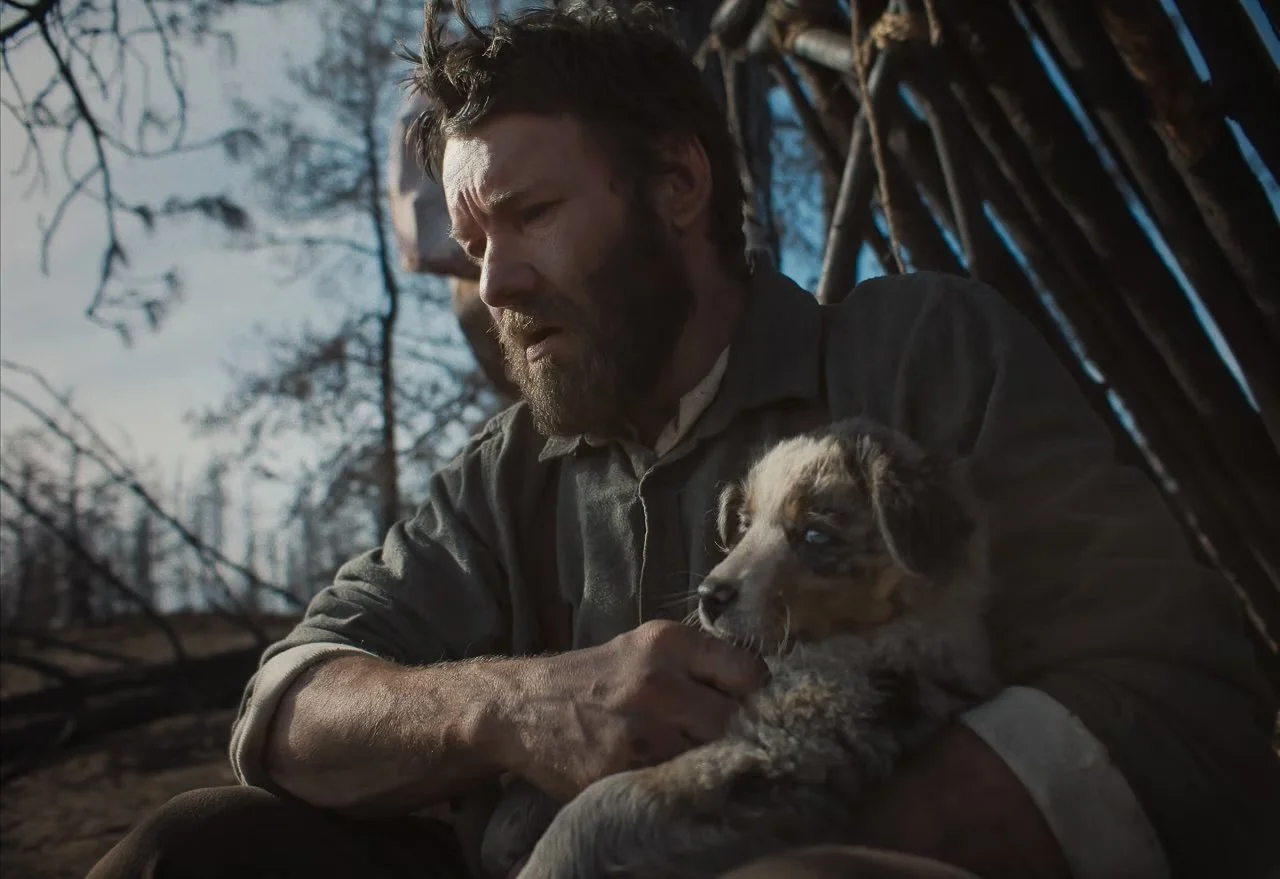
The story follows Robert Grainier, a logger in the Pacific Northwest in the early 20th century, played with remarkable restraint by Joel Edgerton. We simply watch him live—working brutal, dangerous jobs; forming quiet relationships; and trying to make sense of the world after tragedy strikes his family. There’s no grand plot machinery here, just the passage of time and a man doing his best to endure it.
Edgerton is extraordinary in a performance that is anything but flashy. This is the kind of acting that’s harder precisely because it doesn’t announce itself. He communicates entire emotional arcs through posture, stillness and the faintest changes in expression. Even buried under layers of clothing and a full beard, you can practically see his thoughts moving behind his eyes. I’d genuinely love to see awards attention come his way—not because the performance is loud, but because it’s honest.
One of the great pleasures of Train Dreams is how deeply it immerses you in a profession most of us will never touch. The logging community depicted here is fascinating, dangerous and deeply communal. Bentley uses the camera masterfully to keep the film engaging, leaning heavily on breathtaking cinematography rather than conventional storytelling beats. The forests, mountains and open spaces of the Northwest are stunning, to the point where I briefly considered throwing on a backpack and pretending I could survive a hike longer than an afternoon.
The supporting cast is used sparingly but effectively, with familiar faces like William H. Macy, Felicity Jones, Kerry Condon, Nathaniel Arcand, Clifton Collins Jr. and Paul Schneider popping up just long enough to leave an impression. Each interaction adds texture to Grainier’s world, reinforcing the sense that every person he meets carries a story of their own. You don’t just observe this community, you feel embedded in it.
On the surface, Train Dreams is simple. But thematically, it’s rich with ideas about nature, grief, labor, and, most powerfully, connectedness. By focusing so intently on one man’s life, the film becomes a stand-in for all of ours. It’s about how we endure loss, how we find meaning in work and how deeply our lives are shaped by the people and places around us.
This is a quiet, deeply moving film that lingers long after it ends. If I’d seen it last year, it would have landed comfortably in my Top 10 of 2025. Train Dreams confirms that Bentley is an emerging, thoughtful storyteller when it comes to deeply human, emotionally resonant cinema. It’s a reminder that sometimes the smallest stories carry the greatest weight.