Memories of Murder
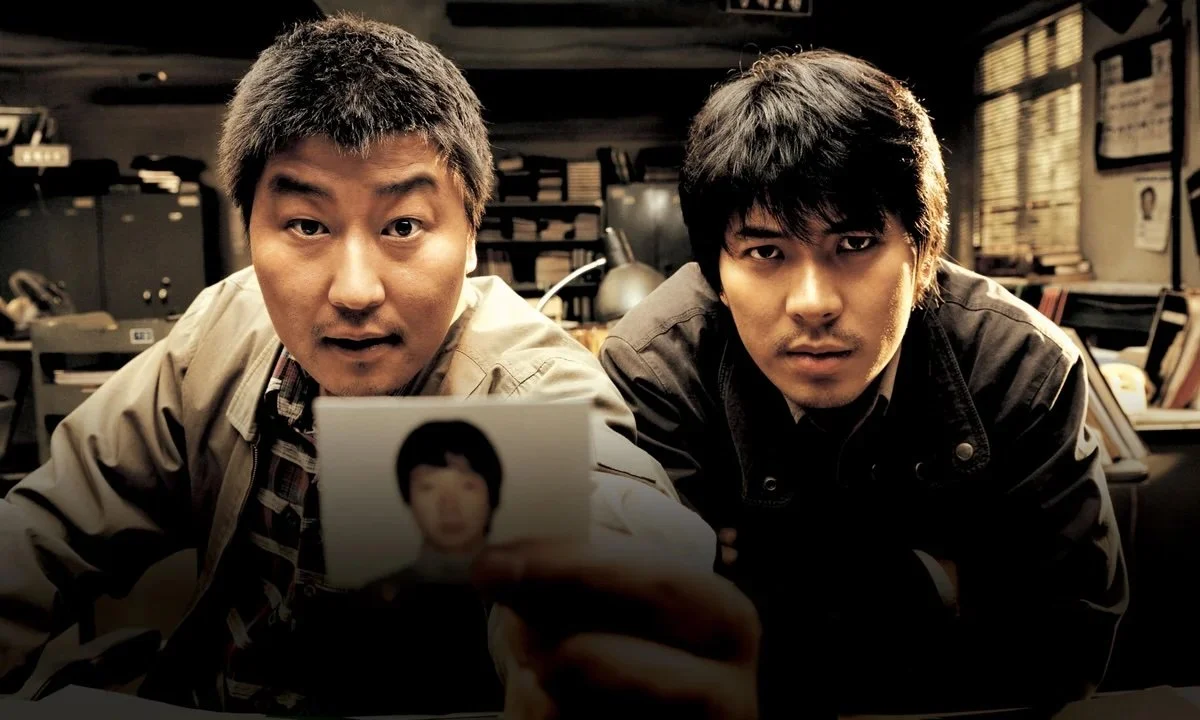
Overall Rating: ★★★★1/2
Pop Culture Footprint: Highly influential; echoes of it can be seen in Zodiac and True Detective
Rewatchability: 3/5 — heavy and unsettling, but rewarding for deeper themes and details
Makes You Think: Absolutely; questions justice, failure and obsession
Conversation Starter: Yes — sparks discussion about the nature of truth, corruption and closure
Holds Up: Completely; still feels modern and urgent more than 20 years later
Where I’d Place It: Should’ve been higher
★★★★ 1/2
#99 – Memories of Murder (2003)
From The New York Times: The 100 Best Movies of the 21st Century
Directed by Bong Joon Ho
Bong Joon Ho has long since proven himself one of the defining filmmakers of our time—Parasite alone would secure his place in history—but Memories of Murder is the film that first signaled his mastery. Released in 2003, this haunting procedural blends noir, social critique and dark humor in a way that continues to ripple through modern cinema. Watching it today, it’s impossible not to see its influence on films like Zodiac and shows such as True Detective.
The story unfolds in a rural South Korean town during the mid-1980s, where a string of brutal murders and sexual assaults has shaken the community. Local detective Park Doo-man (Song Kang-ho) relies on instinct, superstition and questionable tactics, aided by his violent colleague Cho (Kim Roe-ha). When Seoul detective Seo Tae-yoon (Kim Sang-kyung) arrives with a more methodical approach, the clash between modern forensics and small-town intuition fuels both tension and tragedy. As the investigation drags on, what begins as a hunt for a killer becomes a slow unraveling of the detectives themselves—their methods, their morals and even their sanity.
What makes Memories of Murder remarkable is Bong’s ability to balance tones without losing focus. The film is gritty and unflinching, yet punctuated by moments of absurd humor—a sudden dropkick, a bumbling mistake—that remind you how fragile authority can be. Song Kang-ho gives a powerhouse performance, shifting seamlessly between arrogance, desperation and despair, while Kim Sang-kyung provides a cooler, more rational counterpoint that gradually cracks under pressure. Their uneasy partnership captures the futility of pursuing justice in a system riddled with corruption and limitations.
The cinematography is equally striking: rain-soaked fields, dim interrogation rooms and desolate landscapes that echo the detectives’ hopeless pursuit. Bong shows the horror of the crimes without indulging in exploitation, leaving much to the imagination. Like Spielberg’s shark in Jaws, the less we see, the more dreadful it becomes. The respect he grants the victims makes the film all the more unsettling.
If there’s a drawback, it’s that the cultural and historical context of 1980s South Korea may be lost on some viewers, leaving certain critiques less sharp for an international audience. And the unrelenting bleakness makes it a difficult film to recommend lightly—this is not a thriller that ties its threads neatly. But its refusal to offer easy closure is precisely the point.
By the time the final scene arrives—a quiet, devastating gut punch—it’s clear that Bong has crafted more than a detective story. Memories of Murder is a meditation on failure, obsession and the human need for answers that may never come. It’s the kind of film that lingers long after the credits, not because it comforts you, but because it refuses to.