Frankenstein
★★★ 1/2
The story of Frankenstein has been embedded in pop culture for generations, but it’s never been one that I’ve fully connected with. Honestly, my earliest and strongest reference point is still Young Frankenstein, which, to be fair, probably isn’t the most accurate representation of the deeper themes Mary Shelley was exploring.
But when I heard that Guillermo del Toro was tackling the material, I immediately thought it was a perfect match.
Del Toro has always been fascinated with creatures. Not just monsters, but the humanity inside them and the complicated ways humans react when confronted with something different. His films are always visually stunning, packed with intricate production design and unforgettable creature work. And almost every time, he finds a surprising amount of heart within these strange worlds.
And yet, despite how much I admire him as a filmmaker, I often walk away from his movies appreciating them more than truly loving them. This version of Frankenstein ended up being a similar experience.
I’m not a Frankenstein scholar, so I won’t pretend to know how closely this adaptation follows Mary Shelley’s original novel. But the core philosophical question is still very much present: Who is the real monster?
Is it Dr. Victor Frankenstein, the man arrogant enough to create life without considering the consequences? Or the creature itself?
Here, Oscar Isaac makes for a compelling Victor Frankenstein. His portrayal leans into the character’s obsession and ambition without going full theatrical madness. There’s no iconic “It’s alive!” moment here, and honestly, that restraint works. Isaac plays the character as a man consumed by the pursuit of creation, only gradually realizing the weight of what he’s unleashed.
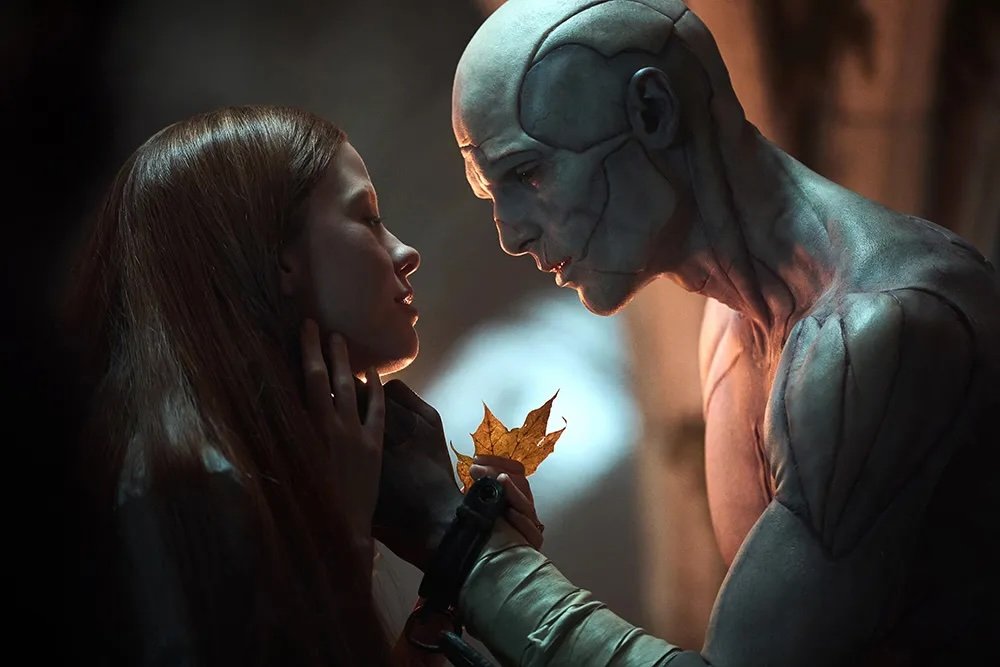
On the other side of the equation is the creature, played by Jacob Elordi. Del Toro once again crafts a sympathetic monster, and Elordi brings an unexpected vulnerability to the role. This version of the creature is even a bit… strikingly handsome compared to past iterations, which adds an interesting dynamic. But Del Toro doesn’t let us forget the danger either. The creature’s violent moments remind us that empathy and fear can coexist.
As expected with a Del Toro film, Frankenstein looks incredible. Every set, costume and creature detail is meticulously crafted. The production design alone is worth admiring.
But this is also a long film, clocking in at around two and a half hours, and it moves at a deliberate pace.
The story is structured in two halves:
• The first largely follows Victor Frankenstein’s perspective.
• The second shifts to the creature’s experience.
The payoff in the final act is satisfying, but the journey there can feel a bit drawn out. One thing that surprised me is how contained the film feels. I expected to see the creature interacting with the world more—moving among people, confronting society in different ways. Instead, many of the scenes unfold within a limited set of locations. The environments are beautifully realized, but I still found myself wanting the story to expand outward a bit more.
There’s also a complicated romantic element woven into the story involving Mia Goth, who plays her role with the eerie charisma she brought to the X trilogy. Visually, she fits perfectly into Del Toro’s gothic world. But narratively, her character left me a little puzzled. There’s a kind of romantic empathy she develops toward the creature that happens very quickly, and I never fully bought into that emotional shift. It reminded me somewhat of the relationship dynamic in The Shape of Water, but here, it didn’t quite land the same way.
For all its length and occasional narrative oddities, Frankenstein is still a film that made me think more deeply about the story than some other versions I’ve seen. And visually? It’s undeniably impressive.
But while I admired the craft, the film never quite moved me in the way I suspect Del Toro hoped it would. Still, for fans of gothic storytelling and Del Toro’s creature-driven filmmaking, this is a fascinating and beautifully made interpretation—even if it’s one that occasionally overstays its welcome.