The Secret Agent
★★★ 1/2
It’s been a while since I’ve seen an espionage thriller, so my interest definitely perked up when I started hearing buzz around The Secret Agent. Not only did the Brazilian film break into the Best Picture conversation, but there was also a lot of attention surrounding Wagner Moura and his portrayal of a tech expert on the run who returns to his hometown of Recife in search of peace, only to realize the place he once called home may not be as safe as he thought.
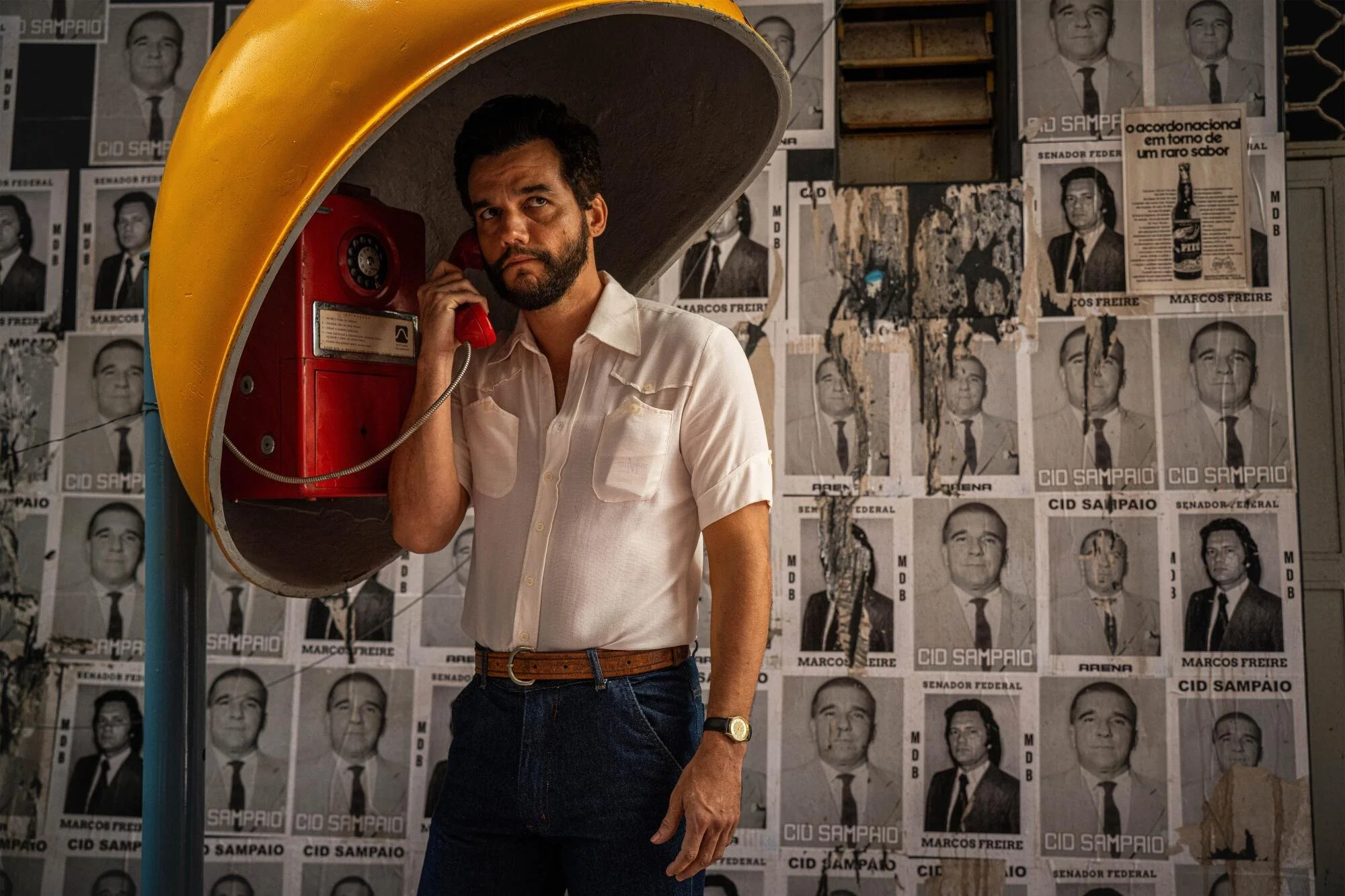
Right away, The Secret Agent stands out as a very well-made and visually striking film. The story is primarily set in 1977, and it’s fascinating to see Brazil portrayed during that era. Director Kleber Mendonça Filho captures the look and tone of the period beautifully, using deliberate camera zooms and framing choices that feel very reminiscent of 1970s political thrillers.
As someone who loves films from that decade, I really appreciated the aesthetic. The grainy texture, the slow pacing and the camera work all feel like an intentional throwback. In many ways, the film plays like an ode to classic cinema and spy thrillers of the past. There’s even a recurring nod to Jaws, which pops up in some interesting ways throughout the movie and reinforces the director’s admiration for that era of filmmaking.
What’s interesting about The Secret Agent is that while it clearly presents itself as an espionage thriller, the film constantly works to throw you off the trail. Just when you think the story is heading in one direction, it veers somewhere else entirely.
You start following characters you didn’t expect to follow. The timeline jumps around quite a bit, introducing people in different time periods and leaving you to piece together how they all fit into the larger story. It’s a very unconventional approach for a spy thriller.
In fact, the tension here doesn’t come from wondering what will happen next, but more from wondering where the story is going to go. Even the film’s conclusion plays against expectations. The ultimate resolution doesn’t revolve around the main protagonist in the way most spy thrillers typically build toward.
The film also dips into some unexpected tonal shifts. At one point there’s a bizarre sequence that feels like an homage to 1970s horror camp involving a severed leg. I could understand what the director might have been going for stylistically, but it just didn’t quite work for me.
Another aspect of the film that may divide audiences is how little information it actually explains. Important details are often left unsaid, and while that ambiguity may be intentional, I found myself feeling more puzzled than intrigued. It’s not so much that there are plot holes, but more that the film withholds context that might help the audience connect the dots.
That said, I can absolutely imagine this film landing differently for viewers who have a deeper understanding of Brazilian history and culture. Much of the story seems rooted in that country’s political past, and for someone closer to that context, the film may feel like a powerful reflection on that history. For me, though, the individual pieces of the story were often more compelling than the overall picture.
Performance-wise, Wagner Moura is excellent. His performance is quiet and simmering, and he does a great job conveying tension without needing big dramatic moments. The supporting cast around him is also very strong. Not only are the performances good, but the way the director frames these characters within different environments and set pieces makes many of them feel memorable.
Even with those strengths, though, the film never fully came together for me the way it clearly has for many others. At nearly three hours long, I kept expecting the story to deliver a moment where everything would finally snap into place. That moment never quite arrived.
Ironically, that may actually be part of the film’s message. Much of the story seems to reflect the lives of people caught up in political systems and corruption—people whose lives are disrupted or destroyed for things they didn’t do. There’s symbolism here about institutions being manipulated, scapegoats being created and public systems being exploited by those in power. In that sense, the themes feel surprisingly relevant to the current moment. None of that commentary is lost on me.
But even recognizing what the film is trying to say, I still found myself wishing for a slightly more focused narrative or a few more traditional thriller elements to hold everything together. I never thought I’d be the one asking for a couple of cleaner action set pieces or a conclusion that tied things together a little more neatly, but sometimes the heart wants what the heart wants.
The Secret Agent is clearly an ambitious film with a lot of craft behind it. I admired many of its individual elements, but as a whole, it never quite came together for me the way I hoped it would.